You don't have a sales strategy. You have a pile of tactics
Most IT and SaaS companies run on activity, not architecture - more outreach, more reps, more tools, and revenue that still won't behave. We install a complete sales strategy system so growth becomes systematic and repeatable instead of lucky.
THE REAL PROBLEM
If execution keeps failing, the problem usually isn't execution
You’ve changed the messaging. Hired more SDRs. Switched the CRM. Pushed the team harder. Revenue still swings quarter to quarter.
Here’s why: when your ICP isn’t fixed, your funnel math is guesswork, and your quota is set from thin air, every decision below it is made in uncertainty.
- ✓Reps each sell their own way
- ✓You can’t tell why one deal closed and another died
- ✓Forecasts are hope, not math
- ✓The team executes something that was never defined
The fix isn’t another tactic.
It’s a system – built top-down, in the right order. Level 1 defines who you sell to. Level 2 designs how you win. Level 3 executes. The data layer keeps it honest.
Most companies optimize Level 3 when the leak is in Level 1.

— Serg Panasenko, Founder

THE SALES STRATEGY FRAMEWORK
A complete operating system for revenue
Three levels, built in sequence. The document that explains how a company finds clients, wins deals, and builds a team that does it repeatably - used by CEO, Head of Sales, reps, and the board.
Who is your client and which markets?
Strategic decisions — set annually, reviewed quarterly- 1 ICP — Ideal Customer Profile with FIT Score 0–10 and Anti-ICP
- 2 Account Priority Matrix — Tier 1 / 2 / 3, tells reps where to invest time
- 3 Revenue Generation Plan — where we compete, revenue waterfall, CAC, payback
Without Level 1, every decision in Levels 2 and 3 is made in uncertainty.
How and why do we win?
Structural decisions — the machine that wins deals- 1 Acquisition model — source + closing model
- 2 Competitive positioning and differentiation
- 3 Pricing strategy
- 4 Sales team structure and org design
- 5 Sales methodology
- 6 Funnel model — revenue worked backwards to leads
- 7 Quota system — 3 levels, top-down
- 8 Compensation plan
- 9 Revenue retention strategy — NRR, churn, expansion
How do we execute?
Operational elements — what the team does daily and weekly- 1 Sales process with MEDDIC overlay by stage
- 2 New-business prospecting system
- 3 Pipeline management and forecasting cadence
- 4 Client success and onboarding
- 5 Account expansion — QBR, upsell, stakeholder mapping
- 6 Sales enablement — battle cards, scripts, objection handling
- 7 Sales operations — CRM hygiene, tech stack, automation
Analytics & Data
The layer that reviews all three levels — leading vs lagging indicators, weekly/monthly/quarterly review rhythm, ownership, and strategy-review triggers. The system learns and improves.
WHY THR SEQUENCE MATTERS
Built in the right order, or it doesn't hold
Every component of Level 2 feeds the next. Skip the sequence and you end up with quota that doesn't match the funnel, comp that drives the wrong behavior, and a team executing something undefined.
Acquisition model first
Determines pipeline math, org design, and quota. Everything else is downstream of this.
Competitive position → Pricing
First define why clients choose you, then at what price. Never the other way.
Team structure after funnel math
Hire for the motion you’ve defined, not before you know what motion you need.
Funnel model after average deal size
Work backwards from revenue target only after fixing the closing model and price.
Quota from the funnel model
Quota set from the model – not from the air, not from last year’s number plus 20%.
Comp reinforces the quota
Compensation plan locks in the behavior the quota system requires.
Retention closes the loop
Found → won → retained → expanded. Without retention, you’re filling a leaky bucket.
Only then optimize Level 3
If Level 3 isn’t working, the problem is usually in Levels 1 or 2 – not in execution.
WHO USES THIS
One document, four audiences
CEO / Founder
Sees whether strategy and resources are aligned. Whether CAC fits the budget. Whether quota is realistic from the funnel model.
Head of Sales
The operational bible. Onboarding, coaching, forecasting, and hiring all build from it.
AE / SDR / Lead Gen
Understands not just “what to do” but “why exactly this” – which changes the quality of execution.
Investor / Board
Sees that growth is systematic, not accidental. One of the strongest signals of GTM maturity.
ANALYTICS & DATA LAYER
The system that tells you when to adjust
Most companies manage only lagging indicators and find out about a problem when it's already a crisis. We install the leading indicators and review rhythm so you see it coming.
Strategy review triggers
Win rate drops >15%
Review methodology and competitive positioning
Churn rises >2%/mo
Review ICP and revenue retention strategy
Avg deal size drops >10%
Review pricing strategy
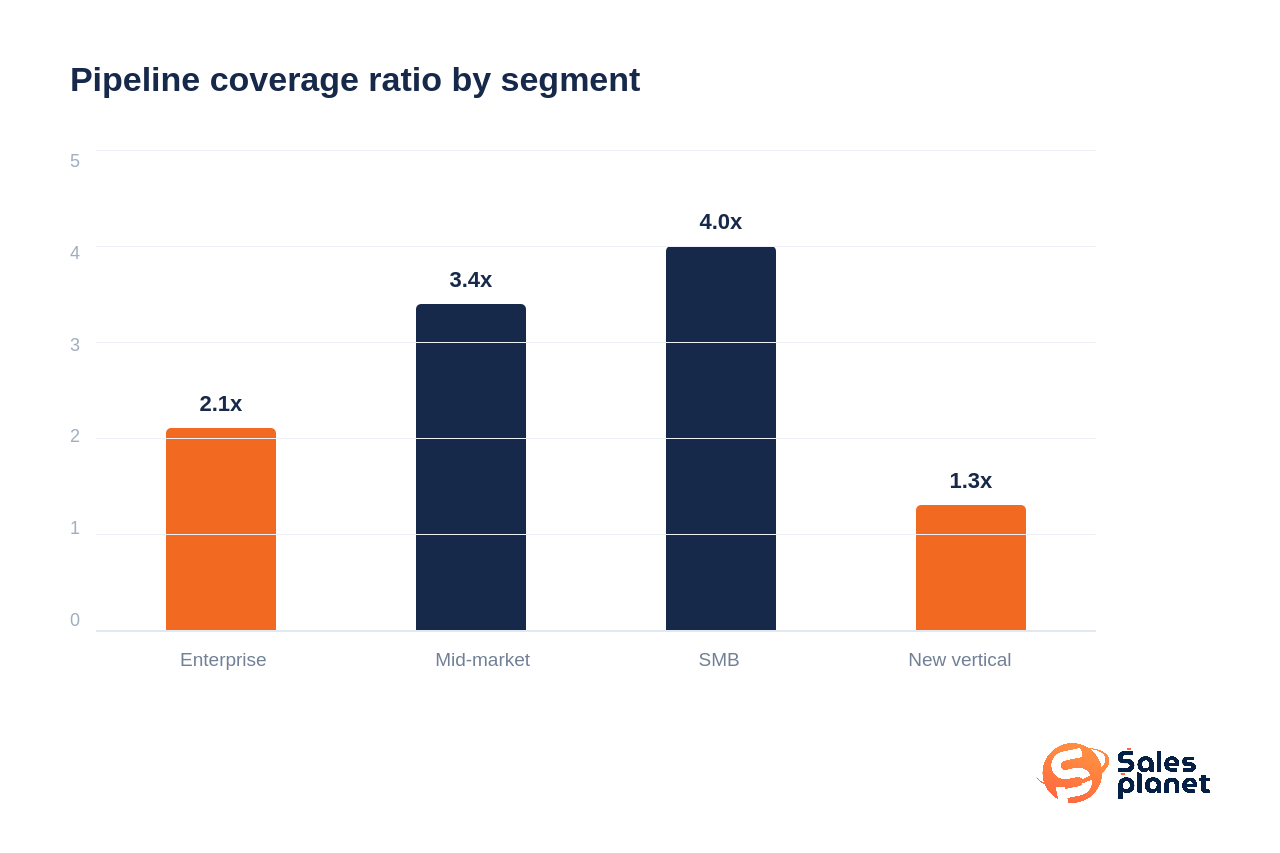
Pipeline coverage <2.5×
Review pipeline math and org design
NRR <95%
Retention becomes priority #1 immediately
Review rhythm
Weekly — Pipeline & Forecasting (Level 3 health check)
Monthly — Revenue waterfall actuals vs plan
Quarterly — ICP, Tier Matrix, Pipeline Math review
Annually — Full Sales Strategy Framework reset
Analytics ownership
RevOps collects and structures the data. Head of Sales interprets and decides. CEO sees the strategic level. Without clear ownership, analytics becomes reporting for reporting’s sake.
DELIVERABLES
What you walk away with
Scored ICP + Account Tier Matrix
Your team decides “work this account or not” in 2 minutes. FIT Score 0–10, Anti-ICP, Tier 1/2/3 with % time allocation.
Revenue Generation Plan
Revenue waterfall, CAC, payback period, and sales budget – board-ready, aligned to corporate strategy.
Acquisition model + funnel math
Defined closing motion, pipeline math from revenue target backwards, quota by model and by person.
Positioning + comp plan
Why clients choose you over competitors – documented by segment and closing model. Comp that reinforces the right behavior.
Retention motion
NRR target and decomposition, churn prevention, expansion as a separate sales motion, early warning signals.
Review system + triggers
Weekly, monthly, quarterly, and annual review cadence. Metric triggers that tell you when and what to revisit, before problems become crises.
HOW IT WORKS
Built in sequence, handed to your team
We work level by level, in order. No skipping ahead to quota design before the funnel model is fixed. No comp plans before the quota system is set.
Audit – map where your current strategy is undefined, find the real leak
Level 1 – fix ICP, account tiers, and revenue plan
Level 2 – design the machine, component by component, in order
Level 3 + data – install execution layer and the review rhythm
Handoff – documented, owned, running without us
A framework, not an opinion.
Most consultants hand you their take and leave. We install a system — the same structured framework that boards read as one of the strongest signals of GTM maturity.
Sales pros first, GTM engineers by design, accountable to your revenue targets.
Proof
We've built complete sales strategy systems for IT services and SaaS companies — ICP through retention, aligned to corporate goals so growth comes from architecture, not luck. [TODO: add a real "before → after" case — e.g. company without defined ICP/quota → framework installed → X% pipeline coverage / Y% win rate improvement.]
COMMON QUESTIONS
Frequently asked questions
What is a go-to-market (GTM) strategy?
A go-to-market strategy is the overall plan for how a company reaches its market and turns it into revenue: who you target (your ICP), how you position and price, which sales motions you use to acquire, and how you retain and expand. It ties strategy, sales, and marketing into one coherent revenue system instead of disconnected tactics.
How is sales strategy different from a sales plan?
Strategy defines the choices: which segments to pursue, which motion to run, how to price and position. The plan is the execution: quotas, territories, activities, and timelines that carry the strategy out. A plan without strategy is just activity; strategy without a plan never ships.
Do we need a sales strategy before investing in AI or tools?
Yes. Tooling amplifies whatever process you already have, including a broken one. If targeting, motion, and qualification aren’t defined first, AI and automation just help you do the wrong things faster. Strategy and process fundamentals come before any tooling investment.
How long does it take to see results from a new sales strategy?
Foundational changes: ICP, motion, pricing, territories – typically show in pipeline quality within a quarter and in closed revenue over two to three. The exact timing depends on your sales cycle length, but the earliest signal is usually a shift in the quality and fit of new pipeline.
Find out which level is actually broken
Most teams are sure the problem is execution. The audit shows you the real one, and exactly what to fix first.
Our Recent Blog Posts
Welcome to our blog, where we explore the latest trends and tips on building sales systems for IT and SaaS.
Finding the right Sales and Support specialists for your team is one of the most crucial responsibilities of every business
From 2020 to 2022, outbound sales (cold outreach via LinkedIn, email, and platforms like Upwork) were the primary lead generation
Stepping into a sales leadership role is an exhilarating yet demanding opportunity. The first 100 days are pivotal in shaping
Growing company revenue is challenging nowadays, so organizations constantly seek ways to improve their sales and marketing performance. One of
Alex is a newly hired Tech Sales Representative at a software development company that offers outsourcing services. He is skilled
Of course, the right sequence requires the founders or the CEO to start with a Corporate Strategy (nice if it